The Problem-Solving Power and Benefits of Our ERP Solution

As businesses grow, managing daily operations becomes more complex. Different departments start working with separate tools, spreadsheets, and manual processes, which often creates confusion, delays, and miscommunication.
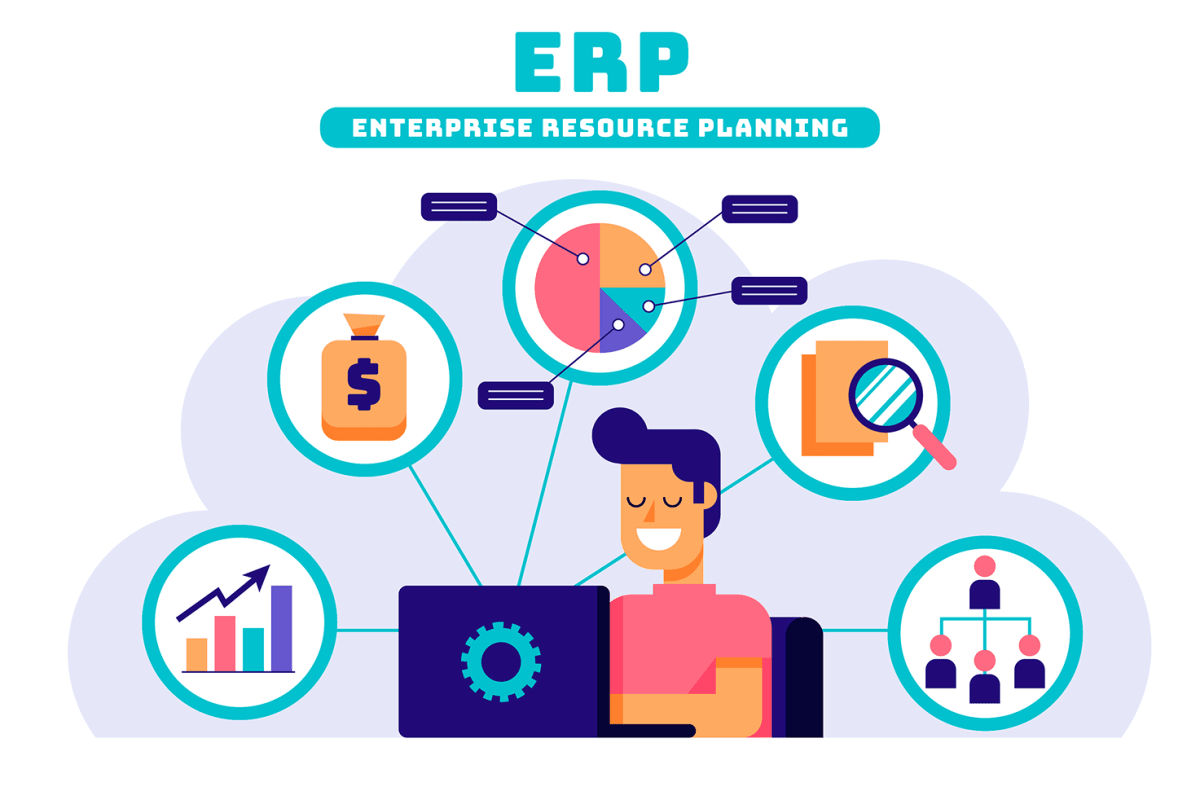
An ERP system (Enterprise Resource Planning) solves this problem by connecting all business functions into one unified platform. It brings finance, sales, HR, inventory, production, and customer management together so that every department works on the same real-time data.
How ERP Solves Business Complexity
Modern businesses struggle with disconnected systems where information is stored in different places. This leads to errors, duplication, and slow decision-making.
A properly implemented ERP system removes this barrier by creating a centralized structure where all departments stay connected. This improves coordination and helps management make faster and more accurate decisions.
Business Process Automation with ERP
One of the strongest advantages of ERP is automation. Many repetitive tasks that normally take time and effort are handled automatically by the system.
With business process automation with ERP, companies can automate:
Invoice creation
Payroll processing
Purchase approvals
Reporting tasks
Inventory updates
This reduces manual workload and allows teams to focus on more important business activities.
Better Financial Management and Control
Managing finances manually can lead to mistakes and delays in reporting. ERP systems solve this by providing real-time financial tracking.
Using accounting ERP systems, businesses can monitor:
Cash flow
Expenses
Revenue
Profit margins
Outstanding payments
This gives management full financial visibility and helps in making better strategic decisions.
Inventory Management in ERP Software
Inventory issues like overstocking or stock shortages can directly impact business performance.
With inventory management in ERP software, companies can track stock levels in real time, manage warehouse operations, and automate reorder processes. This ensures smooth supply chain operations and reduces unnecessary costs.
Cloud-Based ERP Solution for Modern Businesses
Traditional systems require heavy infrastructure and on-site access. However, a cloud-based ERP solution allows businesses to operate from anywhere.
Key benefits include:
Remote access to data
Lower IT infrastructure cost
Easy scalability
Automatic updates
Secure data storage
This makes ERP more flexible and suitable for growing companies.
Enterprise Resource Planning Overview
An Enterprise Resource Planning Overview shows how ERP connects all departments under one system. Instead of working separately, every department shares the same data and workflow.
This creates a smooth flow of information between sales, finance, HR, and operations, reducing confusion and improving productivity.
Digital Transformation Concept
ERP plays a key role in modern Digital Transformation Concept strategies. Businesses are moving from traditional manual systems to digital platforms that offer automation, analytics, and real-time decision-making.
ERP helps organizations become more data-driven, efficient, and competitive in the modern market.
Improved Collaboration and Communication
ERP removes communication gaps between departments. When all teams work on the same system, information flows automatically without delays.
This leads to:
Better teamwork
Faster response time
Fewer errors
Improved coordination
Employees no longer rely on separate systems or manual updates.
Real-Time Data and Better Decision Making
One of the biggest strengths of ERP is real-time reporting. Managers can instantly view business performance without waiting for manual reports.
This includes:
Sales performance
Operational progress
Financial status
Employee productivity
With accurate data, decision-making becomes faster and more reliable.
Reducing Errors and Improving Accuracy
Manual data entry often leads to mistakes that can affect the entire business process. ERP reduces these risks by automating data flow and ensuring consistency across departments.
This improves accuracy in:
Billing
Inventory
Payroll
Reporting
Conclusion
ERP is more than just software — it is a complete business management system that improves efficiency, reduces errors, and connects all departments into one platform.
By using ERP, businesses can automate processes, improve financial control, manage inventory effectively, and move towards digital transformation. This results in better productivity, stronger decision-making, and long-term business growth.