Backend services that handle real concurrent load
Node.js APIs and integrations built for the traffic patterns of a live business, not a demo the same runtime powering our SaaS backends.
How we build with Node.js
Contracts and load patterns decided before code is written.
API Design
Endpoints and contracts defined and versioned before implementation starts.
Data Layer
Schema and query patterns built for the access patterns your business actually has.
Integration & Queueing
Third-party integrations and background jobs isolated from the request/response path.
Load Testing & Deploy
Tested under concurrent load before it reaches production, not after the first spike.
Built to hold up under real traffic
Every feature here maps to something that fails under load if it isn't designed in.
Async, non-blocking I/O
Handles many concurrent requests without spinning up extra threads or processes.
REST & GraphQL APIs
Endpoint style chosen to fit the client consuming it, not forced by the backend.
Background job queues
Long-running tasks emails, exports, sync jobs run off the request path.
Database-agnostic layer
Works with PostgreSQL, MySQL, or MongoDB depending on your data shape.
Rate limiting & auth
Token-based authentication and rate limits built in, not left as a post-launch TODO.
Horizontal scaling ready
Stateless services that scale by adding instances, not by a rewrite.
Works Well With
Custom SaaS Development
Multi-tenant, subscription-ready platforms designed to scale from day one.
Custom App Development
Android, iOS, and cross-platform apps connected to your live business data.
JavaScript Development
The language behind our frontends, backends, and mobile builds.
Next.js Development
Server-rendered React apps that load fast and rank well out of the box.
React Development
Component-driven interfaces for dashboards, portals, and internal tools.
Explore Related ERP Solutions
Explore the ERP modules connected with this industry.
Industries That Use This
Industry-specific inventory use cases
Related Blogs
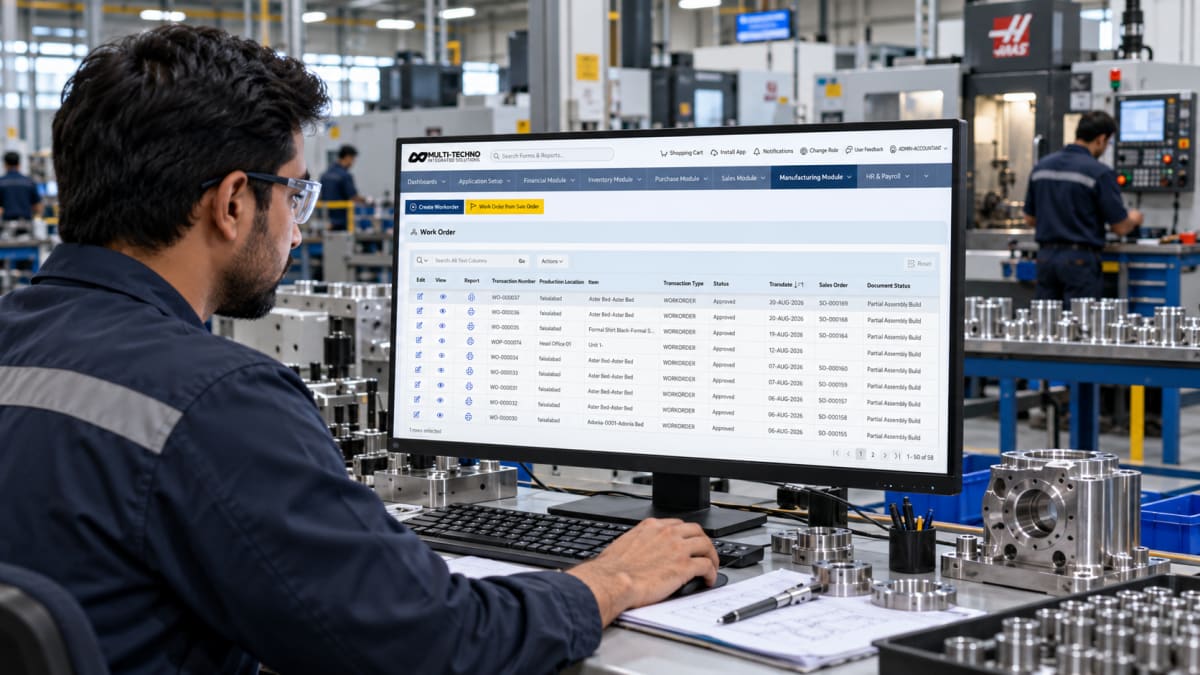
How Discrete Manufacturing ERP Handles Work Orders, Assembly Build & Unbuild
Manufacturing, Textile, Production Management
Discrete manufacturing becomes difficult to manage when production requirements, materials, work orders, and finished as...

Discrete vs Process Manufacturing ERP: Which Model Fits Your Factory?
Manufacturing, Textile, Inventory, Production Management
Choosing a manufacturing ERP is not only about finding software with a production module. The more important question is...
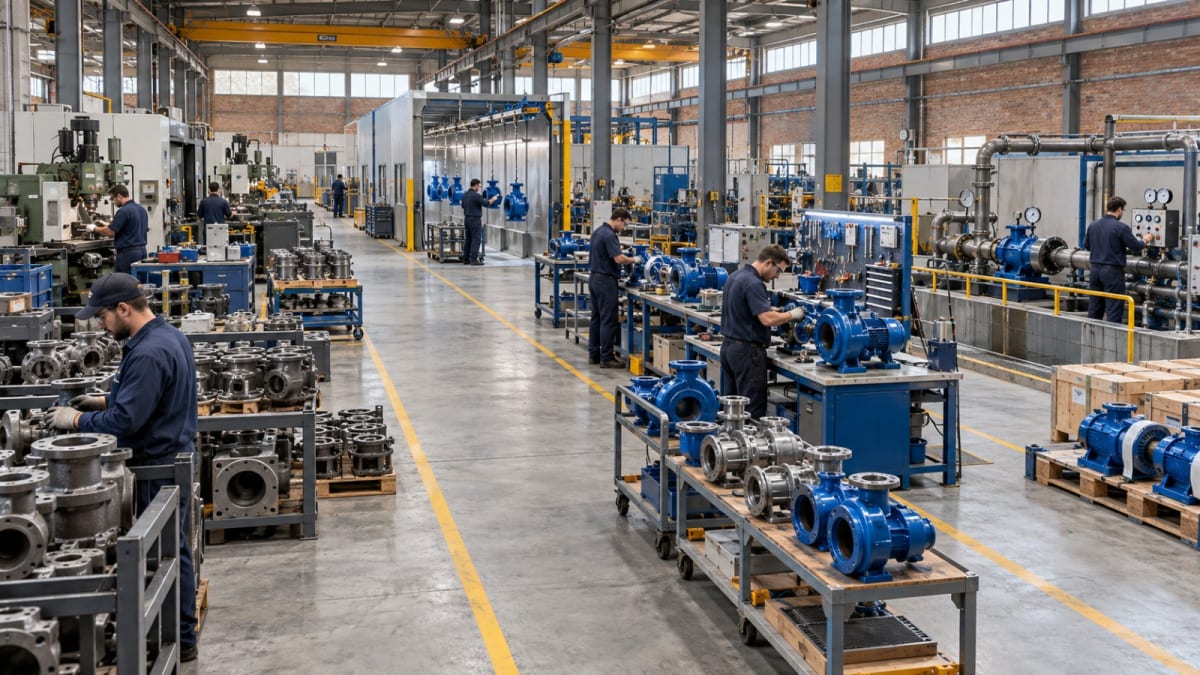
Custom Manufacturing ERP for Complex Production Processes
Manufacturing, Accounting, Inventory, Production Management
Manufacturing processes do not always follow a fixed pattern. As a factory grows, it may introduce multiple production s...
Frequently Asked Questions
01Why Node.js for backend APIs?
Its non-blocking I/O model handles many concurrent connections efficiently, which fits typical API and integration workloads well.
02Can it connect to our ERP database directly?
Yes the API layer can read and write to the same database your Multi-Techno ERP uses.
03How do you handle background tasks like emails or reports?
Through job queues that run outside the request/response cycle, so they don't slow down the API.
04Is this suitable for high-traffic production use?
Yes, services are load-tested and built to scale horizontally before launch.
Book Your Free Demo
Fill out the form below and we'll be in touch shortly.