How ERP Enables End-to-End Traceability in Textile Manufacturing
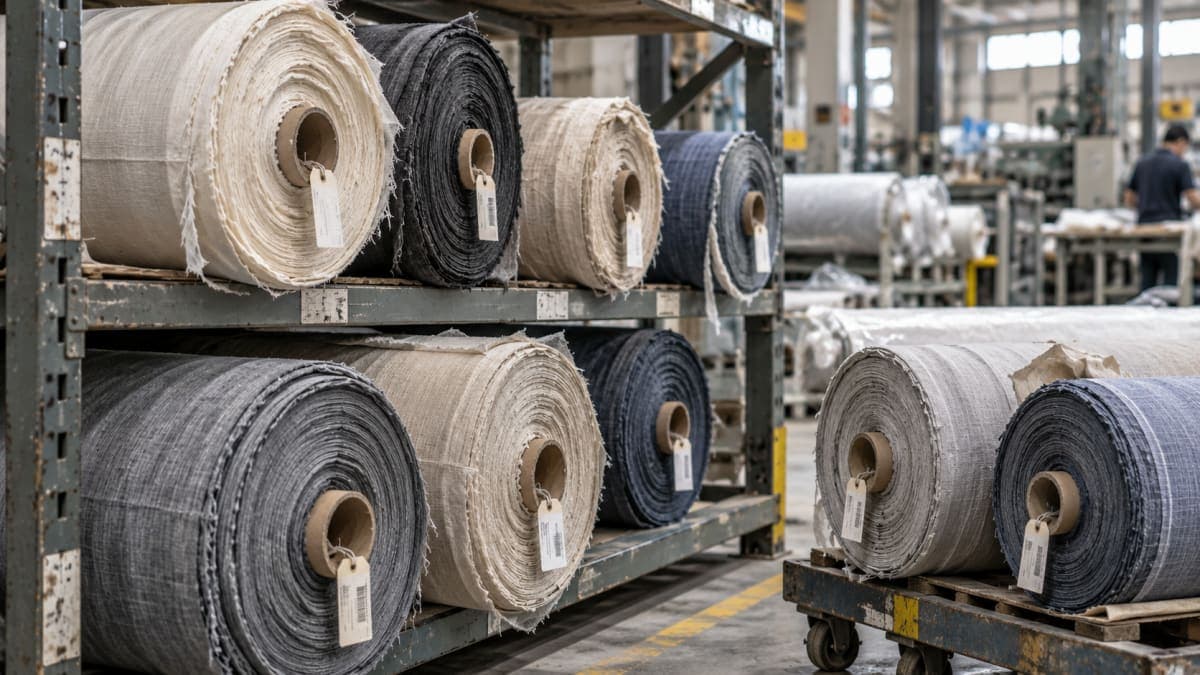
Textile manufacturing involves multiple stages, from raw material procurement and yarn processing to fabric production, dyeing, finishing, cutting, stitching, and dispatch. At every stage, materials may change form, move between departments, or be combined with other inputs. Without connected records, tracing a finished product back to its materials—or identifying which products were affected by a quality issue—can become difficult and time-consuming.
End-to-end textile traceability is the ability to follow material and product history across relevant manufacturing stages, from raw material receipt to finished goods and dispatch. An Enterprise Resource Planning (ERP) system can support this process by connecting inventory transactions, production activities, batch or LOT identifiers, material consumption, and finished-product records.
For textile manufacturers, the objective is not simply to assign a LOT number to a material. It is to maintain meaningful relationships between inputs, production stages, outputs, and the records needed to investigate operational or quality problems.
What Does End-to-End Traceability Mean in Textile Manufacturing?
Textile traceability means being able to establish where a material originated, which processes it passed through, how it was used, and where the resulting products went.
A traceability system should support two important activities:
Backward traceability: Starting with a fabric roll, garment, or finished batch and tracing it back to the relevant production records, material inputs, and supplier information.
Forward traceability: Starting with a raw material or production batch and identifying the downstream production outputs, finished goods, or orders associated with it.
For example, if a customer reports a colour inconsistency in a finished fabric batch, the manufacturer may need to identify the dye lot used, the fabric rolls processed in that batch, and the production records associated with those rolls. If the same dye lot was used in multiple production runs, the manufacturer may also need to identify other potentially affected outputs.
This requires more than recording stock quantities. The records must connect material identity with the production activities and outputs in which that material participated.
The GS1 Global Traceability Standard provides a useful general framework for understanding traceability across product transformations, handling events, and distribution. Textile manufacturers can apply these principles to their own production workflows.
Where Is Traceability Needed Across the Textile Production Process?
The exact workflow depends on whether a business operates a spinning mill, weaving unit, dyeing and finishing facility, garment factory, or an integrated textile operation. Not every manufacturer performs every stage in-house. However, each business needs traceability across the stages relevant to its operations.
1. Raw Material Receipt and Yarn Traceability
Traceability begins when raw materials arrive at the factory.
Depending on the operation, these materials may include fibres, yarn, greige fabric, dyes, chemicals, thread, trims, and packaging materials. Useful records can include supplier details, material specifications, receipt date, received quantity, and the assigned batch or LOT identifier.
When a material is issued to production, its identity should remain connected to the relevant transaction or work order.
For example, if yarn from two different LOTs is used in separate production runs, the manufacturer should be able to distinguish those inputs rather than treating all yarn of the same product type as interchangeable for traceability purposes.
This becomes particularly important when investigating inconsistent material quality, supplier-related issues, or differences in production results.
2. Weaving and Knitting: Connecting Inputs to Fabric Output
During weaving or knitting, yarn is transformed into fabric. Traceability records should establish which yarn inputs were used for a production run and which fabric outputs resulted from it.
Relevant information may include:
The yarn LOTs issued to production.
The production order or batch reference.
The quantity of yarn consumed.
The fabric quantity produced.
The resulting fabric roll or batch identifiers.
Any recorded material loss, rejection, or rework.
The critical relationship is between the input material and the output it produced.
If a particular yarn LOT later raises a quality concern, the manufacturer can use these relationships to identify the relevant fabric batches and investigate whether the issue continued into later production stages.
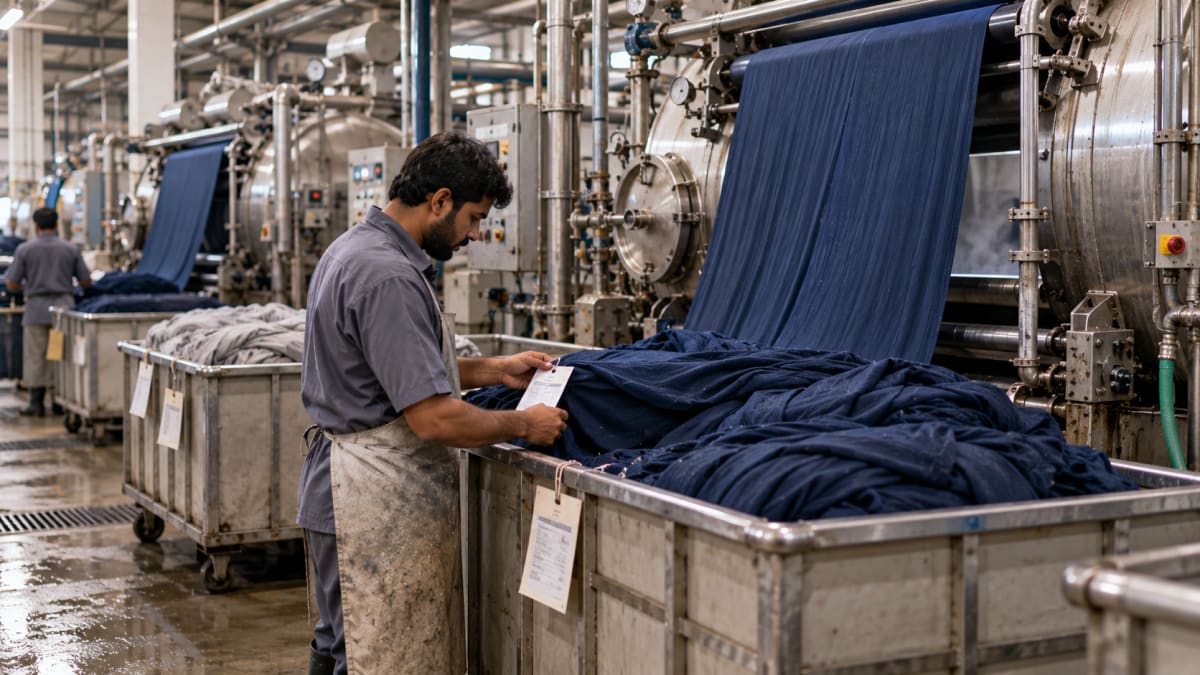
3. Dyeing and Finishing: Maintaining Dye-Lot Traceability
Dyeing and finishing are important points in textile traceability because colour and finishing results can vary between processing batches.
A manufacturer may need to record the dye lot, the fabric batch or rolls processed, the processing order, and the resulting output. Where applicable, quality inspection results and shade approvals should also be connected to the relevant batch records.
Consider a factory that processes fabric from several dyeing batches. If a customer reports a shade mismatch, the factory needs to determine which batch was involved and which rolls or orders may be affected.
Without a clear relationship between dye batches and fabric outputs, staff may need to reconstruct the production history using separate registers, spreadsheets, and departmental records.
With connected records, the investigation can begin from the affected output and move backward through the relevant processing history.
Dye-lot tracking is one component of textile traceability, but it does not replace traceability across the rest of the manufacturing process. The dye batch must remain connected to the fabric and downstream products that depend on it.
4. Cutting and Stitching: Linking Fabric to Production Orders
In garment manufacturing, fabric may be cut into multiple pieces and then assembled into finished products. This transformation creates another important traceability requirement: connecting the original fabric batch to the cutting activity and the resulting production output.
Useful records may include the fabric LOT or roll, cutting order, style, size ratio, quantity issued, cutting output, and material waste. Stitching records can then connect the relevant work order to the garments or production batch completed.
For example, if fabric from a particular roll is used across several cutting orders, the manufacturer should be able to identify the relevant orders when investigating a material-related defect.
Where multiple fabric lots are combined within a production order, those relationships must also be recorded accurately. Otherwise, the factory may incorrectly assume that every finished item has the same material history.
The objective is to preserve the connection between the material used and the output produced, even as material changes form during manufacturing.
5. Packing and Dispatch: Preserving Traceability to Finished Goods
Traceability should not end when production is complete.
Finished goods may be inspected, packed into cartons, transferred to a warehouse, allocated to customer orders, and dispatched. The manufacturer should preserve the relevant relationships between finished batches, packing records, and dispatch transactions.
Depending on the product and required level of control, the records may include:
Finished-product or batch identification.
Packing date and quantity.
Carton, pallet, or shipment references.
Customer order and dispatch details.
Links to the production batch and relevant material records.
This allows the manufacturer to investigate a customer complaint using the finished product or shipment reference rather than beginning a manual search across every department.
For broader supply-chain traceability, GS1's traceability guidance explains how product identification and event records can connect handling, transformation, packing, and shipping activities.
Why LOT and Batch Tracking Alone Is Not Enough
LOT and batch numbers help distinguish groups of materials or products, but assigning an identifier is only the starting point.
A useful traceability system must also preserve the relationships between those identifiers and the events in which the materials participate.
For example, a fabric roll may have a LOT number, but that number alone does not necessarily explain:
Which yarn LOTs were used to produce the fabric.
Which dyeing batch processed it.
Which cutting order consumed it.
Which finished products resulted from that cutting order.
Which cartons or customer shipments contained the resulting products.
These relationships form the traceability chain.
In some production processes, one input batch may contribute to several output batches. In others, several input lots may be combined into a single output. The system must represent these relationships accurately instead of assuming that one input always produces one output.
Manufacturers should therefore evaluate whether their records support tracing both backward and forward through the actual production process.
How Traceability Helps Investigate Textile Quality Problems
Traceability becomes particularly useful when a manufacturer needs to investigate a defect, complaint, or inconsistency.
Consider this illustrative scenario:
A customer reports that a delivered fabric batch has a shade inconsistency. The quality team identifies the affected finished batch and begins tracing its production history.
Identify the affected output. Use the finished batch, roll, carton, or shipment reference to locate the relevant production records.
Trace backward through processing. Identify the dyeing batch, finishing activity, and relevant fabric production records.
Check the material inputs. Review the associated yarn or fabric LOTs, where the records establish those relationships.
Trace forward to related outputs. Determine whether the same input batch was used in other production runs, finished goods, or customer orders.
Investigate and document the findings. Review available inspection results, consumption records, and processing details before deciding what corrective action is appropriate.
This process does not automatically prove the root cause of a defect. It helps the quality team narrow the investigation using recorded evidence rather than relying entirely on recollection or manual reconciliation.
The same principle can support investigations into material defects, inconsistent finishing results, incorrect material usage, or other production issues—provided the relevant events and relationships have been recorded.
Connecting Material Consumption, Production Output, and Wastage
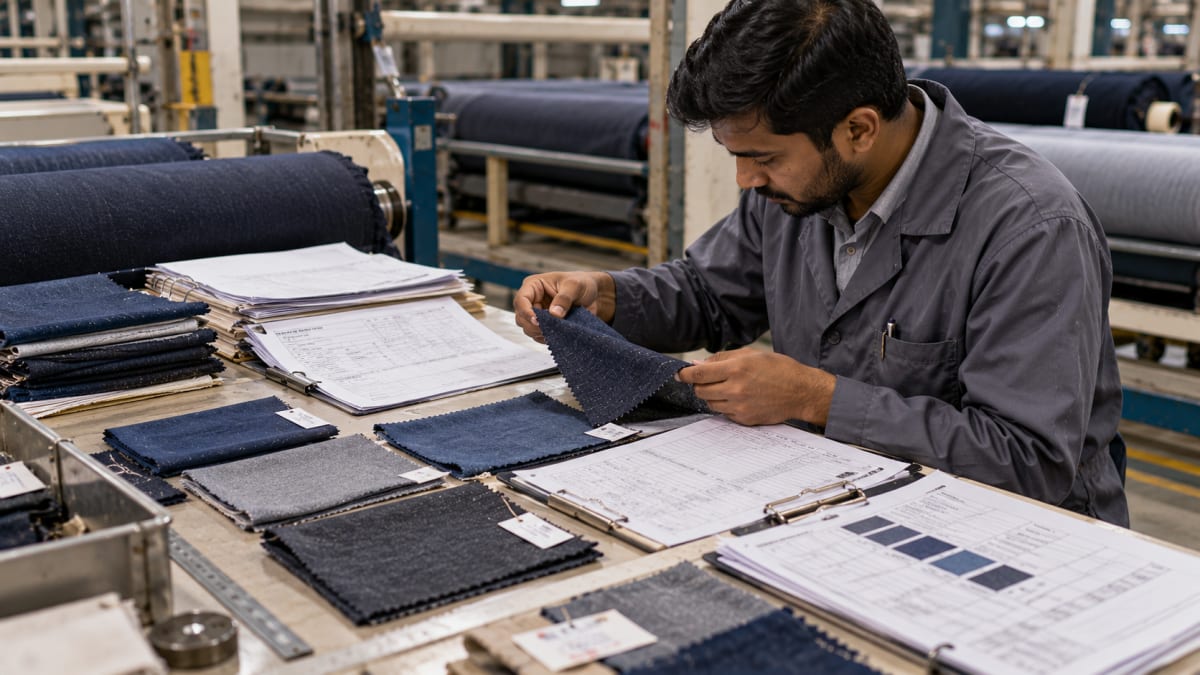
Traceability and production control are closely related. Knowing which material entered a production stage is more useful when the manufacturer can also establish how much was consumed and what output resulted.
For example, a production record may capture the quantity of yarn issued, the fabric quantity produced, and the recorded loss or waste. The resulting information can help the manufacturer investigate unusual differences between material input and output.
For garment production, similar records can connect fabric issued to cutting, usable pieces produced, and cutting waste.
These records should be interpreted according to the production process. Expected losses can differ by fabric type, product specification, process settings, and production method. A quantity difference alone does not necessarily indicate a defect or operational failure.
When material consumption records are connected to batches and work orders, manufacturers can investigate not only how much material was used but also which production activity and output were involved.
A bill of material (BOM) can define the planned material requirements for a product or style. Actual material issue and consumption records then provide additional context for understanding what happened during production.
How ERP Connects Traceability Records Across Departments
An ERP system can help connect information that would otherwise remain distributed across purchasing, stores, production, quality, sales, and dispatch records.
A practical textile traceability workflow may connect:
Purchasing and receiving: Supplier, material specification, receipt quantity, and LOT identification.
Inventory: Stock movements, material issues, transfers, and balances associated with the relevant identifiers.
Production: Work orders, production stages, material consumption, and output batches.
Quality: Inspection findings and the batches or production activities they relate to.
Finished goods: Production output, packing records, and stock availability.
Sales and dispatch: Customer orders, delivered quantities, and shipment references.
The benefit comes from the relationships between these records, not simply from storing them in the same software.
An ERP implementation must be configured to capture the necessary batch identifiers and production relationships at the appropriate stages. Employees must also record material movements and production activities consistently. If a material transfer, consumption event, or output batch is not recorded, the traceability chain may be incomplete.
Manufacturers with complex workflows may need to define different tracking requirements for different products or production stages.
What Textile Manufacturers Should Check in an ERP Traceability Workflow
Before selecting or configuring an ERP system, textile manufacturers should test the traceability process using a realistic production scenario rather than relying only on a feature list.
Use the following checklist during an ERP evaluation:
Raw material identification: Can the system distinguish relevant incoming material lots?
Input-to-output relationships: Can staff establish which materials were used in a production batch?
Stage-wise records: Can the business record relevant activities across its actual weaving, knitting, dyeing, finishing, cutting, or stitching processes?
Dye-lot visibility: Can the manufacturer identify the fabric outputs associated with a dyeing batch?
Material consumption: Can issued quantities and recorded consumption be connected to production orders?
Finished-goods traceability: Can the team trace finished products or packed batches back to the available production and material records?
Forward and backward tracing: Can the team start from either an input batch or a finished output and retrieve the relevant connected records?
Reporting: Can users retrieve the information needed for a quality investigation without manually combining unrelated records?
Operational consistency: Can the system reflect the factory's real workflow, including any relevant rework, transfers, or outsourced stages?
A useful demonstration should test an actual scenario: select a finished batch, trace it backward to the available material records, and then identify other outputs associated with a selected input batch.
The results will show whether the proposed workflow meets the factory's traceability requirements and where additional configuration or process discipline may be necessary.
How Multi-Techno ERP Supports Textile Traceability
Multi-Techno's textile ERP solution describes a connected workflow covering yarn and raw material procurement, weaving, dyeing, knitting where applicable, cutting, stitching, finishing, and packing. Its published capabilities include LOT-level tracking, material requirements through bills of materials, production work order, and reports relating to consumption, dye-lot yield, and production costs.
The purpose of such a workflow is to maintain relevant relationships between material inputs, production activities, and finished output rather than treating each department's records as isolated information.
For example, a textile manufacturer can evaluate how raw material LOTs are recorded, how dyeing batches relate to fabric rolls, and how production records continue through cutting, stitching, and packing. The suitability of the workflow depends on the manufacturer's actual processes and the system configuration required.
Manufacturers should verify their specific reporting, inspection, identification, and operational requirements during a product demonstration. A connected ERP workflow can support traceability, but its usefulness depends on accurate records and appropriate implementation.
To understand how these capabilities relate to your production process, explore Multi-Techno's textile ERP solution and assess whether the workflow fits your factory's material tracking and production requirements.
Frequently Asked Questions
What is textile traceability?
Textile traceability is the ability to follow the origin, processing history, movement, and destination of materials or products through relevant stages of textile manufacturing and distribution. It relies on identifying materials and outputs and maintaining records that connect them.
Why is batch tracking important in textile manufacturing?
Batch tracking helps manufacturers distinguish materials and products processed under different conditions. It can support quality investigations, material reconciliation, production analysis, and the identification of potentially affected outputs when a problem is discovered.
How does ERP help trace fabric back to its yarn or dye lot?
An ERP system can connect material LOTs to production orders, processing records, and resulting fabric batches. When those relationships are recorded correctly, users can begin with a fabric batch and retrieve the relevant upstream records.
What is the difference between lot tracking and end-to-end traceability?
Lot tracking identifies and follows a particular group of materials or products. End-to-end traceability goes further by connecting those lots to material inputs, production transformations, finished goods, and relevant dispatch records across the product's manufacturing journey.
Can textile traceability help identify affected customer orders?
Yes, when the system records relationships between input batches, production outputs, finished goods, and customer orders or shipments. These relationships can help manufacturers identify potentially affected products or orders during an investigation.
What should textile manufacturers look for in traceability software?
Manufacturers should assess material identification, input-to-output relationships, production-stage records, LOT and batch tracking, consumption reporting, finished-goods traceability, and the ability to retrieve relevant information in both backward and forward directions. The workflow should reflect the factory's actual operations.
Conclusion
End-to-end traceability helps textile manufacturers understand how materials move through production, how inputs relate to finished products, and where to investigate when a quality or material issue occurs.
LOT and batch identifiers provide the foundation, but the real value comes from connecting those identifiers to production activities, consumption records, quality information, finished goods, and dispatch records.
An ERP system can support this connected view when it is configured around the manufacturer's actual workflow and employees consistently record the relevant events. By evaluating traceability through practical production scenarios, textile businesses can determine whether their system provides the visibility required for better operational control and more informed quality investigations.
If your factory needs to connect material tracking with production and inventory records, review Multi-Techno textile ERP solution and discuss your traceability requirements with the team.