How to Choose Textile Management Software for Your Manufacturing Business
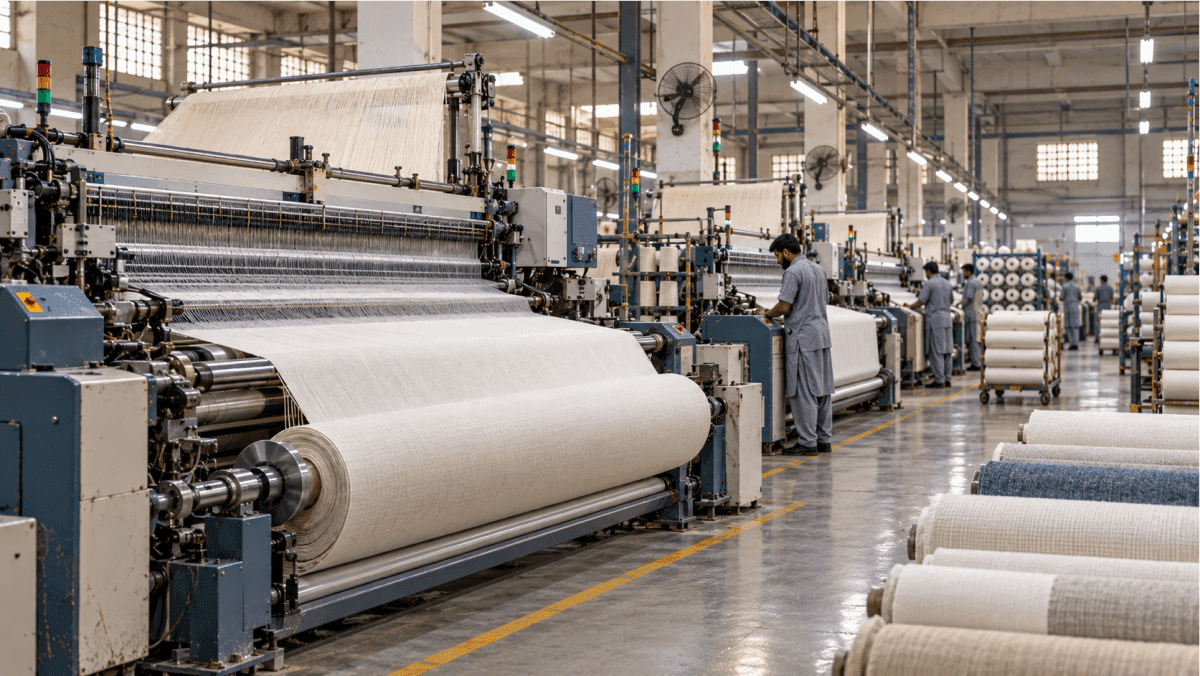
Choosing textile management software is not simply a matter of finding a system that records inventory or generates production reports. Textile manufacturers need to consider how well a solution fits their production processes, material requirements, customer orders and day-to-day business operations.
A spinning mill, weaving unit, dyeing facility and garment manufacturer may all need software, but their operational requirements can differ significantly. A system that works well for one type of textile business may not provide the process tracking, inventory detail or reporting required by another.
The challenge is to identify software that addresses your current operational problems while supporting the way your business expects to grow. Before comparing vendors, manufacturers should understand their workflows, define essential requirements and evaluate how each proposed system handles real business scenarios.
1. Identify Your Textile Manufacturing Requirements
Before comparing textile management software options, review how your business operates and where information becomes difficult to manage.
For example, a weaving unit may need to monitor yarn availability, loom production and fabric output. A dyeing facility may require better visibility into batches, colours, processing stages and material consumption. A garment manufacturer may need to coordinate fabric, accessories, production orders and finished quantities.
These differences matter because textile manufacturing software should reflect the processes used in your factory rather than force every operation into the same workflow.
Start by documenting how your business currently manages:
Customer orders and production requirements
Raw material purchasing and stock availability
Production planning and work orders
Work-in-progress and finished goods
Material consumption, wastage and production output
Quality checks and rejected quantities
Dispatches, invoicing and management reporting
Next, identify the specific problems that need to be resolved. Are production updates delayed? Is stock availability difficult to confirm? Do departments maintain separate records? Is management unable to compare planned production with actual output?
These answers will help you define the requirements your software must meet. They also provide a practical basis for comparing vendors instead of relying on general feature lists.
2. Check Whether the Software Supports Your Production Processes
Production workflows are among the most important considerations when evaluating textile manufacturing software. Different textile operations involve different stages, dependencies and reporting requirements.
Depending on the business, production may include spinning, weaving, knitting, dyeing, printing, finishing or garment assembly. Some manufacturers manage these processes internally, while others outsource selected stages to third parties.
The software should be evaluated against the processes relevant to your operation. A production management system should be assessed on how it handles the stages, work orders and production records your factory actually uses.
Evaluate production orders and process tracking
Ask how the system records production orders, planned quantities, completed output and pending work. Check whether users can identify the current status of an order and understand which stages remain incomplete.
Where applicable, examine whether the system can record material consumption, production losses, rejected quantities and output at individual process stages.
Before comparing systems, map the actual production sequence, including the operations and work centres relevant to your products. Also ask vendors how manufacturing routes define production operations, including the sequence of steps and resources involved. This helps you determine whether the proposed workflow reflects your factory's actual production requirements.
Compare planned and actual production
Production planning is more useful when managers can compare expected output with actual results. Ask whether reports can show production progress, delays, material shortages and differences between planned and completed quantities.
The objective is not simply to digitise production records. It is to make operational information easier to review and act upon.
For businesses assessing broader factory workflows, manufacturing management and ERP capabilities can provide additional context when defining production-related requirements.
3. Evaluate Inventory Management for Yarn, Fabric and Other Materials
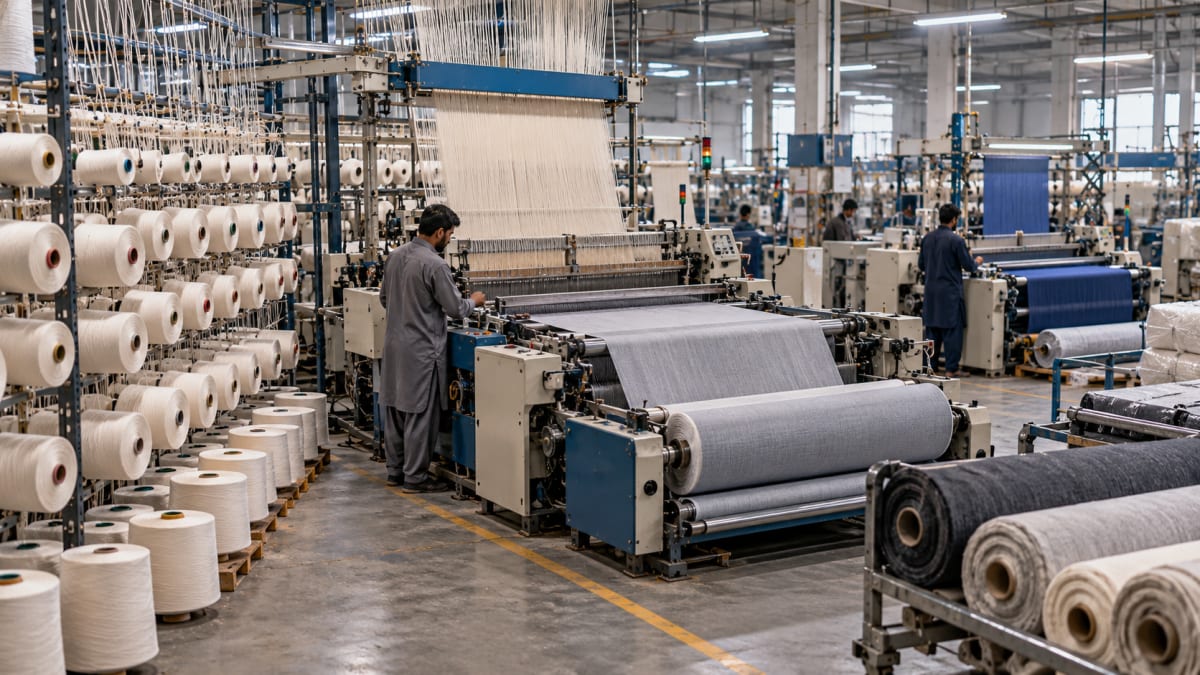
Textile inventory can involve several material types, units of measurement, storage locations and stages of completion. Depending on the operation, a manufacturer may handle yarn, greige fabric, processed fabric, dyes, chemicals, accessories and finished products.
A basic stock register may not provide enough visibility when materials move between stores, production departments and external processing facilities.
When evaluating textile inventory management, check whether the proposed system supports the level of detail your business requires.
Important considerations include:
Stock receipts, issues and transfers between locations
Material availability for planned production
Different units of measurement where required
Batch or lot identification and traceability
Separate records for raw materials, work-in-progress and finished goods
Material consumption, wastage and stock adjustments
Inventory valuation and movement reporting
For example, knowing that a warehouse contains a particular quantity of fabric may not be sufficient if production requires a specific batch, colour or quality specification. The software should provide the relevant details when these distinctions affect purchasing, production or customer commitments.
During a demonstration, ask the vendor to show how a material receipt is recorded, issued to production and reflected in the resulting stock balance. Also review the system's inventory management capabilities to understand how stock records relate to purchasing, production and other business transactions.
4. Assess Customer Order Management and Material Planning
Customer orders influence purchasing, production schedules, material requirements and delivery commitments. If order information is maintained separately across spreadsheets or departmental systems, it can become difficult to establish what needs to be produced and whether the necessary materials are available.
When evaluating textile ERP software, examine how the system connects customer orders with the activities required to fulfil them.
Consider whether users can:
Review confirmed, pending and completed orders
Identify materials required for an order
Check stock availability before production begins
Track order progress through relevant production stages
Review pending quantities and expected delivery dates
Identify orders affected by material shortages or production delays
The precise requirements will depend on your manufacturing model. A business producing standard products for stock may plan differently from a manufacturer producing according to customer specifications.
Ask the vendor to demonstrate a complete example, starting with a customer order and continuing through material planning, production, finished stock and dispatch. This helps reveal whether the system connects these activities or merely records them in separate modules.
Where material shortages affect production schedules, manufacturers should also evaluate how the purchasing and procurement process connects supplier orders, goods receiving and material availability.
5. Understand Production Costing and Material Consumption
Production costs can be difficult to evaluate when material issues, wastage, processing expenses and output records are maintained separately.
Before choosing textile manufacturing software, determine which costs your business needs to monitor and at what level. Depending on your operation, costing may be required by product, production order, batch, process or customer order.
A bill of materials (BOM) defines the materials and quantities required to produce an item. Where relevant, it can provide a starting point for material planning and product costing, although actual requirements may vary with production conditions and wastage.
For example, a manufacturer may want to compare the expected material requirement for an order with the quantity actually consumed. Another may need to review the cost of processing fabric through several production stages.
During vendor evaluation, ask:
Can planned and actual material consumption be compared?
Can wastage and production losses be recorded?
Which direct and indirect costs can be included?
Can costs be reviewed by the relevant product, order or process?
Which costing reports are available as standard?
Do additional reports require configuration or custom development?
Also clarify how the software handles changes in material prices, production quantities and processing requirements.
For a more detailed understanding of material usage, examine how manufacturers can track material consumption against production activity and compare actual usage with planned quantities.
Do not assume that every system supports detailed textile costing in the same way. Request a demonstration using a realistic example from your business and confirm any limitations before making a decision.
6. Review Quality Control and Batch Traceability
Quality requirements vary across textile manufacturing processes. Depending on the products being manufactured, businesses may need to record inspection results, colour variations, fabric defects, rejected quantities or other quality-related information.
These requirements should be identified before selecting a system rather than added to the project after implementation has begun.
Ask the vendor whether the proposed solution can support the quality checks relevant to your operations. Establish when inspections are recorded, who can access the results and how rejected or reworked quantities are handled.
Batch and lot traceability may also be important where a manufacturer needs to identify which materials were used for a production order or which finished goods came from a particular batch.
For manufacturers that need to trace materials through processing and distribution, the GS1 Global Traceability Standard provides a useful reference for understanding traceability across the supply chain.
The appropriate level of traceability depends on the business and its customer requirements. Confirm that the system can record the information you actually need and retrieve it when investigating a production or quality issue.

7. Determine Whether Customization Is Necessary
Not every textile manufacturer follows the same production model. Differences in machinery, processing stages, material specifications, subcontracting and reporting can affect how well a standard software package fits a business.
When comparing textile ERP systems, distinguish between requirements that can be handled through existing functionality, those that can be configured and those that need custom development.
This distinction can affect implementation time, cost, maintenance and future upgrades.
Before committing to a vendor, clarify:
Which required processes are supported without customization?
Which settings can be configured by authorised users?
Which requirements need additional development?
How will custom features be tested and maintained?
Could future updates affect customized functionality?
What are the estimated costs of changes and ongoing support?
A customizable system may be appropriate when your workflows differ from standard processes. However, customization should address a defined business requirement rather than recreate every existing manual procedure without evaluating whether it is still necessary.
The aim is to find a practical balance between process fit, implementation complexity and long-term maintainability.
8. Check Reporting, Integration and Deployment Requirements
Software should provide useful information to the people responsible for purchasing, production, inventory and management. Before selecting ERP for textile manufacturers, establish which reports are essential for daily operations and which are needed for periodic review.
Depending on your requirements, these may include production progress, stock movements, material consumption, pending orders, finished quantities and financial summaries.
Ask whether the required reports are available as standard, can be configured or require custom development. Also check whether users can access the information they need without relying on manual consolidation from several systems.
Integration and deployment decisions deserve similar attention.
If your business already uses accounting software, attendance systems or other business applications, determine which systems must remain in use and whether information needs to be exchanged between them.
Discuss the following with shortlisted vendors:
Required integrations and their availability
Data migration from existing systems
User roles and access permissions
Cloud or on-premises deployment options
Backup, security and recovery arrangements
Ongoing maintenance and technical support
Do not assume that an integration, deployment option or security feature is included simply because a vendor offers an ERP solution. Confirm the scope and associated costs before signing an agreement.
9. Compare Vendors Using Real Manufacturing Scenarios
Product demonstrations are more useful when every vendor is evaluated against the same business requirements.
Rather than asking only for a general presentation, prepare a few scenarios based on the way your factory operates. These might include receiving raw materials, issuing them to production, recording output, handling wastage, completing an order and updating finished-goods inventory.
Ask each vendor to demonstrate how the system handles these scenarios. Record which requirements are supported, which need configuration and which cannot currently be met.
Use the following checklist to structure your evaluation:
Production: Can the system represent your actual manufacturing processes?
Inventory: Does it track the material details and stock movements you require?
Order management: Can teams follow orders from planning through completion?
Costing: Can the business review relevant consumption and cost information?
Quality: Are the required inspections and traceability records supported?
Customization: Are additional requirements feasible and maintainable?
Reporting: Can users access the reports needed for their responsibilities?
Implementation: Are the scope, timeline and responsibilities clearly defined?
Support: What training, maintenance and post-implementation assistance are available?
Total cost: What will software, implementation, customization and ongoing support cost?
Where possible, speak with customers operating in a similar manufacturing environment. Their experience can help you understand practical implementation challenges, training requirements and the vendor's support arrangements.
The goal is not necessarily to select the system with the largest number of features. It is to identify the solution that meets your essential requirements with an acceptable level of cost and complexity.
10. Plan Implementation Before Making the Final Decision
Even suitable textile management software can deliver disappointing results if implementation is poorly planned.
Before selecting a vendor, establish how existing records will be reviewed and migrated, who will validate the data, how employees will be trained and how the system will be tested before full adoption.
A realistic implementation plan should define the project scope, responsibilities, milestones, testing process and post-launch support arrangements.
Your own team will also need to participate. Employees must understand the new procedures, provide accurate information and report problems during testing. Management should identify who will make decisions when existing processes need to change.
Avoid relying on an estimated go-live date without understanding the work required to reach it. The timeline may depend on the number of processes being implemented, the quality of existing data, customization requirements and the availability of key employees.
Clarifying these points before purchase helps reduce uncertainty and gives both the manufacturer and software provider a clearer understanding of the project.
Choosing the Right Textile Management Software
The right textile management software should fit your manufacturing processes, provide the operational information your team needs and remain practical to implement and maintain.
Start by documenting your current workflows and identifying the problems that matter most. Evaluate production tracking, inventory, order management, costing, quality control and reporting against those requirements. Then compare vendors through realistic demonstrations and confirm the scope, costs and support arrangements before making a commitment.
For manufacturers considering a configurable ERP approach, Multi-Techno textile ERP solution is a relevant starting point for exploring how textile-related processes can be managed within an ERP workflow.
Before requesting a demonstration, prepare a short list of your most important operational challenges. This will help you assess whether a proposed system fits your business rather than relying on a generic feature presentation.
Frequently Asked Questions
What should textile manufacturers look for in management software?
Textile manufacturers should evaluate production tracking, material and inventory management, customer orders, costing, quality records, reporting and implementation requirements. The priority depends on the type of manufacturing operation and its existing challenges.
Is textile management software the same as textile ERP software?
The terms can overlap. Textile management software may refer to systems focused on particular operational activities, while textile ERP software generally aims to connect multiple business functions. The actual scope depends on the product, so manufacturers should verify the modules and workflows included.
Can textile ERP software support different manufacturing processes?
Some systems support multiple production processes through standard functionality or configuration, while others are designed for narrower workflows. Manufacturers should ask vendors to demonstrate the specific processes they need and clarify which requirements involve additional development.
How much does textile manufacturing software cost?
Costs vary according to the software's scope, number of users, deployment model, customization, integrations, implementation and ongoing support. Request a breakdown of initial and recurring costs so that different vendors can be compared fairly.
How can a manufacturer evaluate a textile ERP system before buying?
Prepare a list of business requirements, select representative manufacturing scenarios and ask each vendor to demonstrate them. Check functionality, reporting, customization, implementation, support and total cost before making a decision.