How to Trace Chemical Raw Materials Across Production Batches
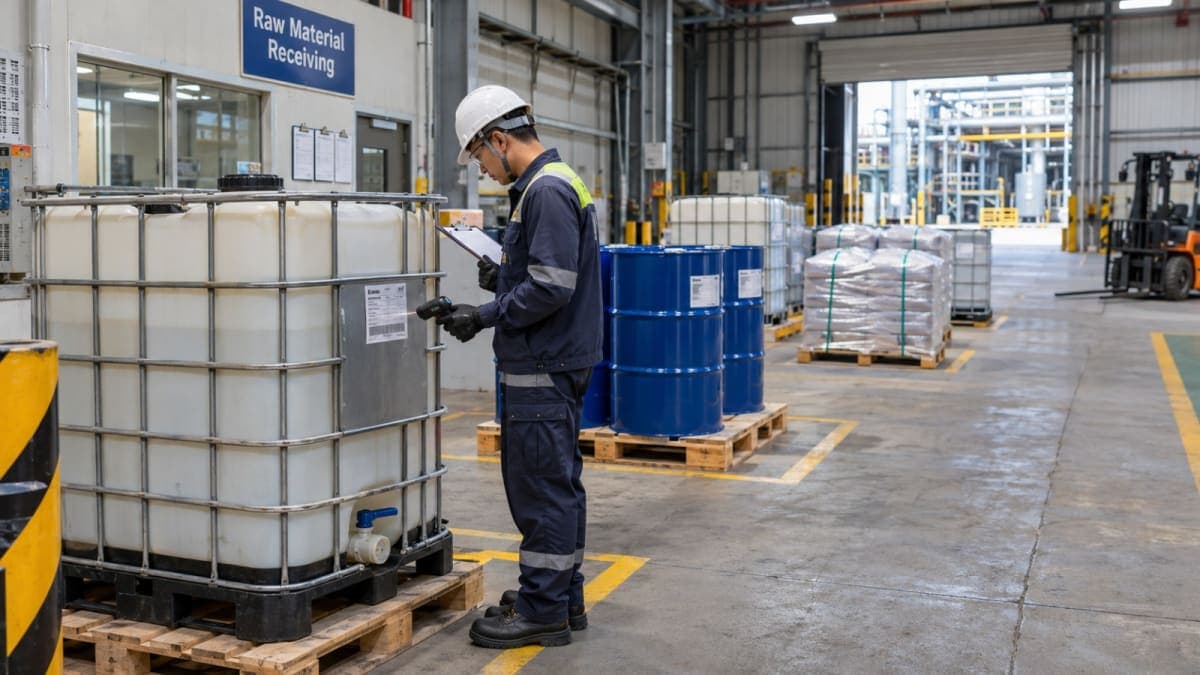
chemical manufacturers often use the same raw material across multiple production batches, while a single production batch may contain materials received under different supplier lot numbers. Without connected records of material receipts, inventory movements and production consumption, identifying which batches used a particular raw material lot can become difficult. Raw material traceability connects these records so manufacturers can investigate material issues, identify affected production batches and understand where materials have moved throughout the manufacturing process.
Effective raw material traceability requires more than recording a lot number in inventory. Manufacturers need to preserve the relationship between incoming supplier lots, inventory transactions, production work orders, actual material consumption and finished production batches. This relationship is particularly important when materials are partially consumed, combined with other lots or used across several production runs.
Why Raw Material Traceability Matters in Chemical Manufacturing
Chemical manufacturing involves materials with different suppliers, specifications, quantities and handling requirements. A manufacturer may receive the same chemical raw material several times, with each delivery carrying a different supplier lot number. These quantities may enter the same warehouse, move between storage locations and eventually be used in different production batches.
The challenge arises when a material-related problem is identified after production has already taken place. For example, a supplier may report a quality concern affecting a particular delivery. The manufacturer then needs to determine whether that material remains in inventory, which production orders consumed it and which finished batches may have been affected.
Without connected records, the investigation may require manually comparing purchase documents, receiving records, stock movements and production paperwork. This can delay the identification of affected quantities and make it harder to establish an accurate production history.
A structured traceability process helps manufacturers maintain the origin of incoming materials, distinguish between different supplier lots, review material movements and identify the production batches associated with a particular lot. It also supports investigations involving supplier complaints, production inconsistencies and customer-reported product issues.
For chemical manufacturers, the challenge becomes more significant when several raw materials are combined, blended or processed into intermediate and finished products. The ability to identify each contributing material lot is therefore an important part of production record management.
Understanding the Difference Between Raw Material Lots and Production Batches
A raw material lot identifies a particular quantity of incoming material associated with a supplier, receipt or defined production source. It helps manufacturers distinguish one quantity of an item from another, even when both quantities have the same item name or specification. For a broader overview of how ERP connects production, inventory, purchasing and other chemical manufacturing requirements, read our chemical manufacturing ERP guide.
A production batch, on the other hand, identifies a quantity of product manufactured during a defined production run or under a particular production record. It represents the output of a manufacturing activity rather than the original supplier delivery.
The terms lot and batch are sometimes used interchangeably across industries. Some manufacturers use the same terminology for incoming and finished materials, while others maintain separate identifiers for supplier lots, internal inventory lots and finished production batches.
What matters for traceability is that the system preserves the relationships between these identifiers. A finished production batch should be traceable to the raw material lots that contributed to it, while an incoming raw material lot should be traceable to the production batches in which it was used.
For example, a manufacturer may receive Raw Material A under Supplier Lot A-104 and later receive the same material under Supplier Lot A-108. Although both deliveries contain the same inventory item, their origins are different. Production Batch P-201 may consume material from A-104, while Production Batch P-202 uses material from A-108. If both quantities are treated as one undifferentiated stock balance, identifying the production batches affected by a problem with A-104 becomes much more difficult.
Understanding whether a factory follows process manufacturing rather than discrete production also helps define the production records and workflows required for traceability.
How to Trace Chemical Raw Materials from Receiving to Production
A reliable traceability process connects material receiving, inventory management and manufacturing activities. Each stage must preserve the information required to identify the original material and understand how it moves through production.
Identify Incoming Raw Material Lots at Receiving
Traceability begins when raw materials arrive from suppliers. At this stage, manufacturers should establish how each delivery will be identified and recorded.
Relevant information may include the raw material name or item code, supplier name, supplier's original lot number, purchase order reference, receipt reference, received quantity and unit of measurement. Depending on the material and the manufacturer's procedures, receipt dates, expiry or retest dates and supporting documents such as Certificates of Analysis may also be required.
The supplier's original lot identification should remain available throughout the material's lifecycle. If the manufacturer assigns an internal lot number, the records should preserve its connection with the supplier's original reference. Otherwise, the business may know its internal stock identifier but lose the ability to establish which supplier delivery it represents.
Receiving procedures should also define how materials are identified physically and how their status is recorded before they become available for production. Where inspection, approval or segregation is required, those activities should form part of the manufacturer's documented process.
Maintain Lot-Wise Inventory Records
Once material has been received, manufacturers need to maintain visibility of its quantity and movement through inventory. This includes transfers between storage locations, issues to production, unused material returns and adjustments to recorded balances.
Consider a warehouse holding two consignments of the same chemical raw material. One belongs to Supplier Lot A-104 and the other to Supplier Lot A-108. A general inventory balance may show the total quantity available, but a traceability process must also distinguish the quantity belonging to each lot.
This distinction becomes important when a particular supplier lot is placed under investigation or restricted from further use. The manufacturer needs to identify the affected quantity without incorrectly treating every unit of the same inventory item as part of the problem.
Lot-wise inventory records should therefore preserve material identity and relevant transaction references as stock moves between stores and production. Physical identification and segregation procedures should support these records wherever material characteristics or quality requirements make them necessary.
Connect Material Issues with Production Work Orders
A production work order identifies the manufacturing activity for which materials are required. Connecting material issue transactions with the relevant work order helps establish which materials were supplied to a particular production activity.
However, recording only the item name and total issued quantity may not be sufficient. Where multiple supplier lots of the same material are available, the manufacturer also needs to know which lot supplied the issued quantity.
For example, a production order may require 300 kg of a chemical raw material. The warehouse issues 180 kg from Supplier Lot A-104 and 120 kg from Supplier Lot A-108. A record showing only a total issue of 300 kg does not preserve the complete lot-level relationship. The transaction records need to distinguish the two source lots and their respective quantities.
This connection provides the basis for investigating which incoming material lots were used in a particular production order.
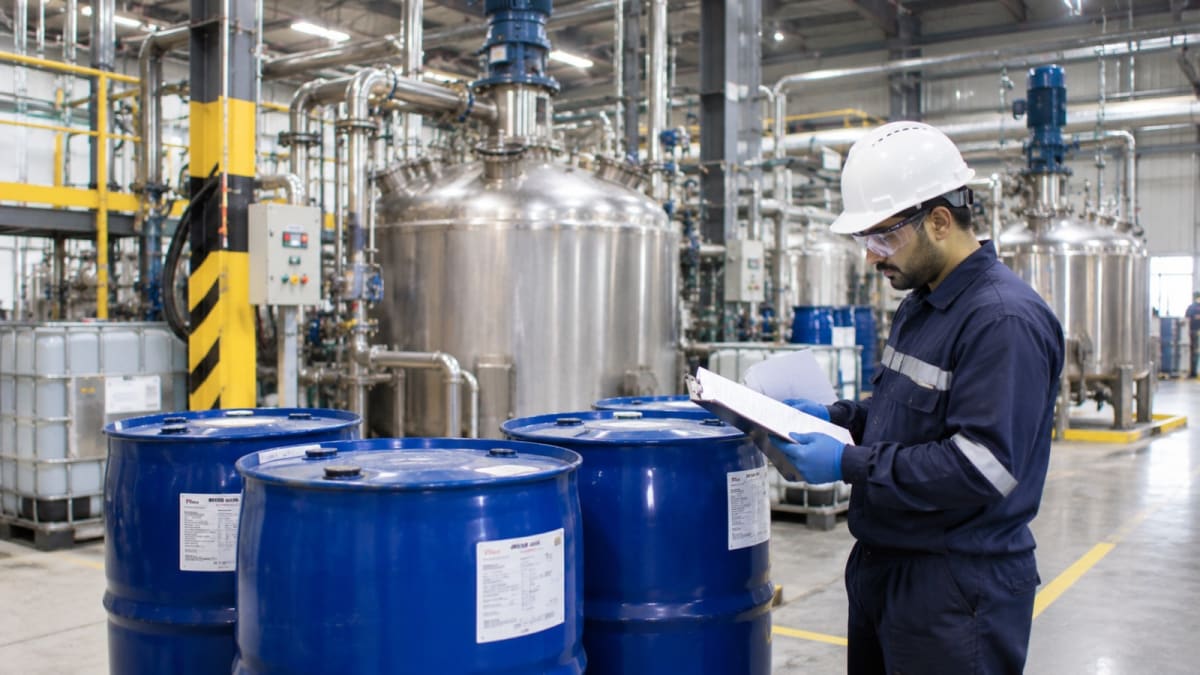
Record Actual Material Consumption
The quantity issued to production is not necessarily equal to the quantity consumed in the manufacturing process. Some material may remain unused, be returned to inventory or require an adjustment under the manufacturer's procedures.
For example, a work order may require 300 kg of a raw material and receive the full quantity from inventory. Production may ultimately consume 285 kg and return the remaining 15 kg. The manufacturer should be able to reconcile the issued, consumed and returned quantities.
Planned material requirements, actual issues and actual consumption should therefore be treated as distinct records. This helps manufacturers investigate differences between expected and actual material usage without automatically assuming that every variance represents a production loss or quality problem.
Multi-Techno provides standard manufacturing functions such as Process Work Order, Work Progress and Material Consumption. Its production reporting includes Actual vs. Plan Consumption Summary and Daily Actual vs. Plan Consumption. These functions support production and consumption management. The exact relationship between individual supplier lots and production work orders required for complete lot genealogy must still be verified against the customer's configured workflow. For a deeper explanation of planned requirements and actual material usage, see our guide to tracking material consumption in process manufacturing ERP.
Maintain Finished Production Batch Records
The traceability process should continue beyond material consumption. Manufacturers also need to maintain records identifying the output produced through each relevant production activity.
Depending on the manufacturing process, these records may include the finished product, production batch number, related work order, production quantity, production date and relevant process documentation. Quality inspection and release references may also be required under the manufacturer's procedures.
The relationship between consumed raw material lots and the resulting finished production batch is what makes forward and backward traceability possible.
If production output is divided into multiple finished lots, repacked or transferred into another production stage, the relevant relationships should also be preserved. Otherwise, the traceability chain may become incomplete after the initial production run.
How One Raw Material Lot Can Be Used Across Multiple Production Batches
One of the main challenges in chemical manufacturing is that raw materials do not always move through production in a simple one-to-one relationship. A single supplier lot may be used across several production runs, while one finished production batch may contain material from multiple supplier lots.
Consider a manufacturer that receives 500 kg of a chemical raw material under Supplier Lot RM-104. The material is then used in three production batches: 150 kg in P-201, 200 kg in P-202 and 100 kg in P-203. The remaining 50 kg stays in inventory, subject to the manufacturer's stock and quality procedures.
If the supplier later reports a problem with RM-104, the manufacturer needs to identify P-201, P-202 and P-203 as production batches that consumed material from this lot. It must also determine whether any of the remaining quantity is still available and whether affected finished products have already been transferred or dispatched.
Now consider a different situation in which Production Batch P-204 uses 100 kg from Supplier Lot RM-104 and another 200 kg from Supplier Lot RM-109. If a concern is raised against RM-104, the manufacturer should be able to identify P-204 and distinguish the contribution of RM-104 from the other raw material lot.
These examples demonstrate why a total stock balance or overall material consumption figure cannot establish complete lot traceability. The records must preserve the identity and quantity of each contributing lot against the relevant production activity.
Forward and Backward Traceability in Chemical Production
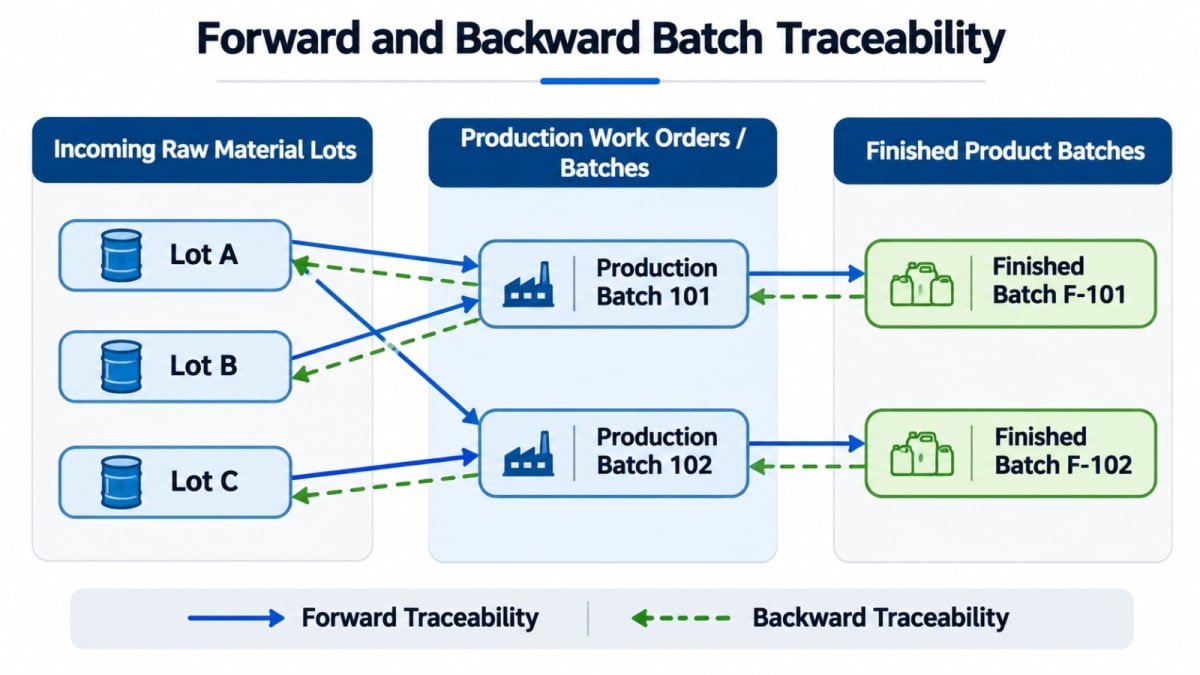
Chemical manufacturers need to investigate material and production issues in two directions. Forward traceability follows an incoming material lot into production and finished products, while backward traceability starts with a finished production batch and identifies the raw materials used to manufacture it.
Forward Traceability: From Raw Material to Finished Product
Forward traceability starts with an incoming raw material lot and follows its movement through inventory and production.
Suppose a supplier informs a chemical manufacturer that Supplier Lot RM-104 may have a quality issue. The manufacturer needs to establish how much of RM-104 was received, how much remains in inventory and which production work orders consumed it.
The investigation then follows those work orders to the resulting production batches. If the finished products were transferred, packed or dispatched, the manufacturer may also need to identify the affected quantities and their destinations.
This process helps establish the potential downstream impact of the original supplier lot. Without the connection between material issues and production records, the manufacturer may struggle to identify which products need further investigation.
Backward Traceability: From Finished Batch to Raw Materials
Backward traceability begins with a finished product or production batch and works back through its manufacturing history.
For example, if a customer reports a problem with Finished Batch FB-305, the manufacturer should be able to identify the production work order associated with that batch, the raw material items used and the supplier lots from which those materials originated.
The investigation may also require reviewing actual consumption quantities, production records and relevant inspection documents. This helps the manufacturer examine potential upstream causes instead of relying only on the finished product's identification number.
Both directions are necessary for a complete investigation process. Forward traceability helps identify products potentially affected by an incoming material issue, while backward traceability helps investigate the raw materials and production activities behind a finished batch.
The GS1 Global Traceability Standard provides a useful framework for understanding traceability events across receiving, processing, production and shipping, along with the key data elements needed to describe those events.
How Lot Mixing, Splitting, Returns and Rework Affect Traceability
Chemical production can involve material movements that make traceability more complicated than recording one raw material lot against one production batch.
A large supplier lot may be divided into smaller quantities and issued to different production work orders. In that situation, each issue should preserve the original lot identity and show the quantity allocated to the relevant production activity.
The opposite situation can also occur: a production batch may use material from two or more supplier lots. Each contributing lot should remain distinguishable in the consumption records where lot-level traceability is required. Recording only the combined material quantity can hide the origin of the individual contributions.
Unused material returned from production introduces another consideration. The return should retain its connection with the appropriate material and original lot. If the material is returned without preserving its identity, the warehouse may have difficulty determining which incoming lot the remaining quantity belongs to.
Rework and reprocessing can introduce additional material movements or connect an earlier production batch with a new production activity. Manufacturers should define how the original and subsequent batch references are maintained so that the production history remains understandable.
Inventory adjustments also affect traceability. Physical counts, damaged material, approved write-offs and other adjustments can change a recorded lot balance. The relevant quantity, reason and transaction reference should be maintained so that historical material movement can still be reviewed.
These scenarios should be considered during ERP evaluation because a system that records only initial receiving and final stock balances may not preserve the detailed relationships required for production investigations.
What Should an ERP System Record for Chemical Lot Traceability?
When evaluating ERP software, chemical manufacturers should look beyond the presence of a lot number field. The important question is whether the system can preserve relationships between incoming materials, inventory transactions and production activities.
For incoming materials, the system should distinguish different supplier lots of the same raw material and maintain the relationship between supplier references and internal inventory records. Receiving quantities, relevant dates and supporting documentation should also be retrievable.
For inventory control, manufacturers should be able to review quantities by lot and retain the relevant references when stock is transferred, issued, returned or adjusted. Partial issues and remaining quantities should be reconcilable without losing the original lot identity.
For production, the ERP should support the association of specific raw material lots with work orders and actual consumption records. It should also be possible to identify multiple lots used in one production batch and trace one incoming lot across several production batches.
For finished products, manufacturers should evaluate whether production batches can be connected with the work orders and raw material lots involved in their manufacture. Where required, the system should also make relevant dispatch and customer records available for downstream investigations.
Reporting and historical records are equally important. Users should be able to review material movement history, investigate returns and adjustments, and retrieve the relationships needed for a traceability investigation.
A practical way to evaluate these capabilities is to select one incoming raw material lot and ask the ERP provider to demonstrate how it can be traced into production. Then select a finished production batch and ask the provider to identify the incoming raw material lots used in its manufacture. The demonstration should include partial issues, multiple contributing lots and material returns where these situations apply to the business.
This exercise can reveal gaps that a general software feature list may not show.
How Multi-Techno ERP Supports Chemical Inventory and Production Management
Multi-Techno provides customizable ERP capabilities covering purchasing, inventory and manufacturing operations. Its standard functions include inventory transactions, LOT/Batch Balance updates and process manufacturing activities.
The Purchase module includes Items Receipt Note and related purchasing records for managing incoming materials. Inventory functions include Update LOT / Batch Balance, Issue Notes, Return Notes and inventory adjustments. Relevant inventory reports include Item Ledger, Stock Movement Details and Store-wise Closing Balance.
For manufacturing operations, standard functions include Process Work Order, Work Progress and Material Consumption. Production reports include Work Order Status, Actual vs. Plan Consumption Summary and Daily Actual vs. Plan Consumption.
These functions provide a foundation for managing material receipts, inventory balances and production activities. However, manufacturers evaluating complete chemical lot genealogy should verify how their specific requirements for supplier lot identification, lot-wise consumption, production batch relationships and finished-product tracing will be implemented.
Multi-Techno supports customization according to agreed business requirements. Additional screens, workflows and reports can be configured where the customer's traceability process requires functionality beyond the available standard modules. The required relationships and reporting scope should be established during the requirement assessment rather than assuming that complete end-to-end lot genealogy is already available as a standard feature.
Frequently Asked Questions
What is raw material traceability in chemical manufacturing?
Raw material traceability is the ability to identify where a material originated, how it moved through inventory and production, and which production batches used it. It helps manufacturers investigate supplier issues, material quality concerns and finished-product complaints.
What is the difference between a raw material lot and a production batch?
A raw material lot identifies a particular quantity of incoming material, often associated with a supplier or receipt. A production batch identifies a quantity of product manufactured during a defined production run. One production batch may use multiple raw material lots, and one raw material lot may be used across multiple production batches.
How can one raw material lot be traced across multiple production batches?
The manufacturer needs records connecting the original supplier lot with each inventory issue and production work order that consumed it. The quantity used in each production batch should also be recorded so that all affected production runs can be identified if the supplier lot becomes a concern.
What is forward and backward traceability?
Forward traceability starts with an incoming raw material lot and identifies the production batches and finished products that used it. Backward traceability starts with a finished production batch and identifies the raw material lots and production records associated with it.
Is inventory lot tracking enough for complete production traceability?
Not necessarily. Inventory lot tracking can identify and manage material quantities, but complete production traceability also requires relationships between material lots, production work orders, actual consumption, finished batches and, where required, dispatch records.
What should chemical manufacturers look for in lot tracking software?
Chemical manufacturers should evaluate supplier lot identification, lot-wise inventory balances, partial issues and returns, production consumption records, finished-batch relationships and forward/backward traceability reporting. The software should also support the manufacturer's specific production and documentation requirements.
Conclusion
Chemical raw material traceability depends on maintaining reliable relationships between incoming supplier lots, inventory movements, production work orders, actual material consumption and finished production batches. When these records remain disconnected, identifying the impact of a material issue can become a time-consuming investigation.
Manufacturers should therefore evaluate ERP systems based on their ability to preserve these relationships, support both forward and backward tracing, and adapt to the way their chemical production processes actually operate.
Multi-Techno helps manufacturers manage purchasing, inventory and production workflows through its customizable ERP platform. Chemical manufacturers can discuss their raw material tracking and batch traceability requirements with the Multi-Techno team to assess the workflows, reporting and customization needed for their operations.